Being Almost American
A personal note from producer and Cowboy Bear Ninja partner, Adrian Selkowitz:
In a nation continually shaped by debates over immigration, ALMOST AMERICAN asks a profound question: what does it truly mean to belong? I became involved when producer Baktash Ahadi asked for my opinion on an early rough cut of a film about DACA recipient, Sam Soliman. Sam had received a microgrant through the Baldwin Leadership Program in Lancaster, PA, intended to foster personal growth and leadership skills. He used the grant to document his journey exploring his family’s origins and connecting with estranged relatives. Within the footage that Sam's best friend Evan Werner had captured, Baktash and I saw something universal that we felt would resonate.
ALMOST AMERICAN is an intimate and deeply humanizing film at a time when immigrants, persons of color, and many others in this country are being treated as less than or other. This type of storytelling, championing people of diverse backgrounds, amplifying the voices of repressed people, celebrating community, helping folks feel seen and validated and worthwhile — these ideas are built into the DNA of Cowboy Bear Ninja.
Over the next six months, Sam, his co-director Saritha Rothermel, Baktash, and I went back and forth, in and out of supervised edit sessions, shuffling scenes around giving shape to the story. The result? A story that is singular yet universal: a portrait of resilience in the face of loss, and a reminder that behind every policy are lives suspended between hope and despair.
What I want everyone to take away from this film is that we are all the same. It doesn’t matter where you were born or who your parents are. If you want to be a part of this great American experiment, you should be welcomed with open arms. We’re not seeing that right now, and that breaks my heart.
Just in time for our world premiere at Big Sky Documentary Film Festival, I now pass the mic to Sam and Saritha to share how their collaboration began, and how the power of documenting Sam’s immigration story helped them both embrace their identities.
Take it away, Saritha and Sam!
- Adrian Selkowitz
—
Saritha: Let’s start with how we met.
Sam: How did we meet? I don’t remember, everything has been a blur the last couple of years.
Saritha: My brother-in-law, Jonathan, is a friend of yours and that’s how we were introduced.
Sam: Yes and I officially met you through your husband Michael. When I first started this project, I had no idea how to make a documentary, so I met with a lot of filmmakers with more experience in this realm to learn more. I had a tough time looking at my footage since the project is so close to me. I was just really critical of everything I was doing and reached a point where I needed to ask for help and I remember connecting with both you and Michael.
Saritha: That’s right, and then you came over for coffee at our house and we got to talking more about this project. I really resonated with your family’s immigration story and felt connected to you. The more I got to know your story, the more I felt compelled to amplify your voice. I felt like I could help ask questions and be a fly on the wall to witness the highs and lows so you could let yourself be present in the moment when we filmed.
Sam: To be honest, asking you to be my co-director was one of the best decisions I’ve made. It’s really hard trusting another person with telling your story but building trust with you over the first couple months made it a no brainer for me. With the state of the world now, everything feels so up in the air but with the help of you and the whole team, I’ve been able to see the importance of sharing my story and feeling brave enough to do so.
Saritha: Yes, I will never forget the conversation we had about choosing courage over fear and not playing small. Neither of us knew the journey this film would take, but we both felt a responsibility to honestly share your lived experience.
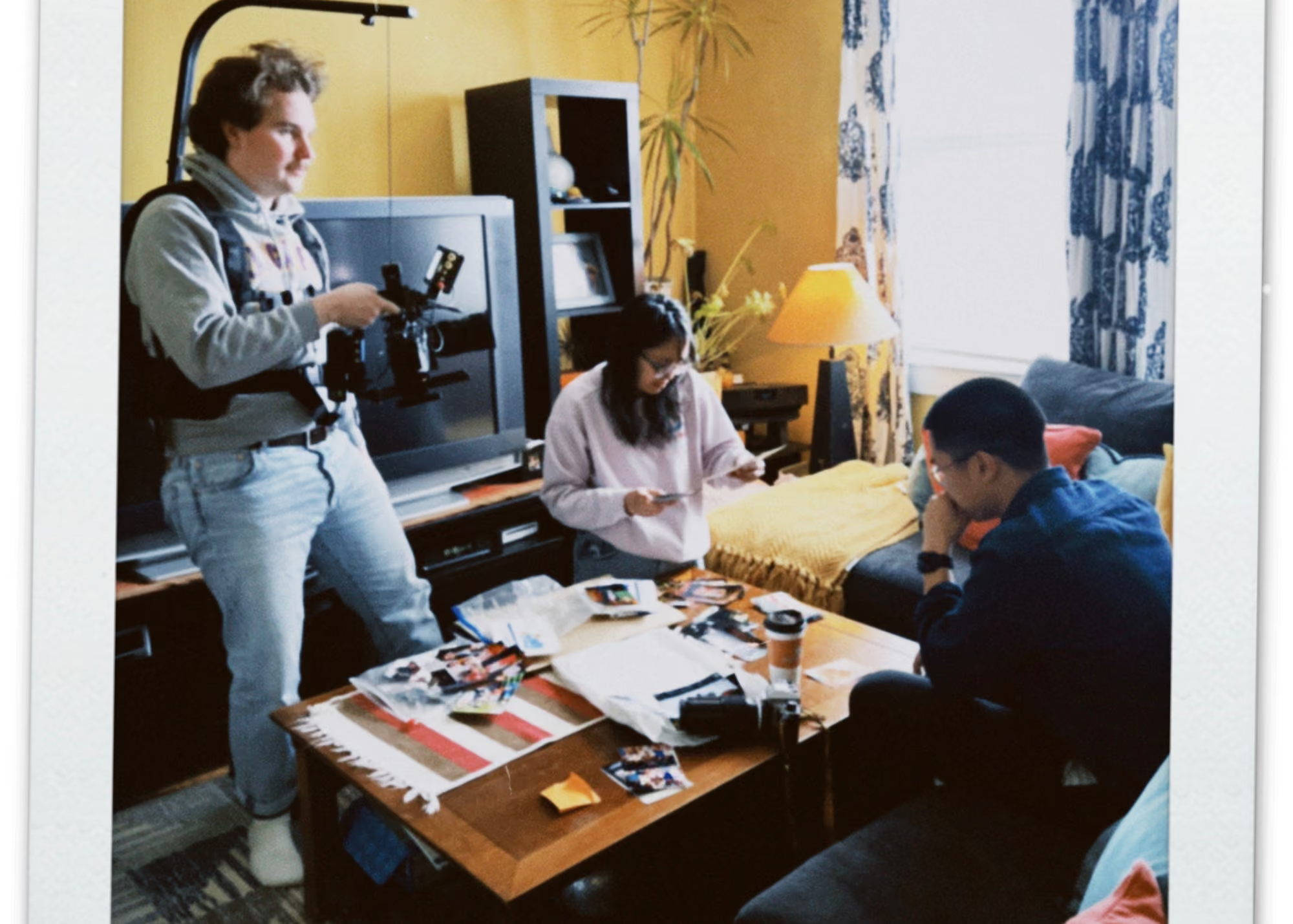
Sam: The easiest part of co-directing this documentary with you was letting you do all the work while I cried my eyes out. Just kidding. I think the easiest thing about co-directing this documentary with you has been feeling like I could trust you fully in the moments where I felt like I could not make decisions. Life felt impossible to deal with during the weeks of my mom’s deportation. I wanted to say no to filming it but knowing I could not only trust you with it but also my best friend Evan, our DP, to capture it made it easier.
Saritha: Yes, the fact we had so much trust established within our team has made it possible to document those excruciating moments. I remember countless times I was crying on the other side of the camera. We all truly felt like it was an act of love to bear witness to the pain that you and your family were walking through. Even though it was brutal to keep shooting,I think that it is important for people to understand that your experience is representative of over half a million DACA recipients and many immigrants in this country.
Sam: From the start, I knew I wanted to tell my family’s story. One realization I had from one of our interviews was that telling my family’s story required me to share my own experience as well. As weird as it was, I was excluding myself from my family.
Saritha: Yes, I think one of the most powerful things about this experience has been seeing how the process of making this film has helped you to embrace your identity and understanding how your family’s immigration story shapes who you are today. Watching you go through this transformation helped me also embrace my own identity as an immigrant and find my creative voice as well.
Saritha: The entire crew heads to Big Sky Doc Fest for our premiere in two weeks. Honestly, I’m still shocked. I’m so glad that we all will be together to celebrate. How are you feeling?
Sam: I feel pretty nervous honestly. It’s the first time putting our project into the universe and I hope it’s received well.
Saritha: I’m really excited to see how the audiences will respond to our film. I hope it resonates and sparks important conversations about DACA and the need for immigration reform.
Sam: Yeah I hope so too.
—
Please support the many efforts toward unified legislative solutions and a permanent pathway to citizenship for Sam and the half a million other DACA recipients who deserve better than a life in limbo. Call your representatives and ask them to pass the bipartisan Dream Act of 2025.


