Five Questions with Marcie Hume
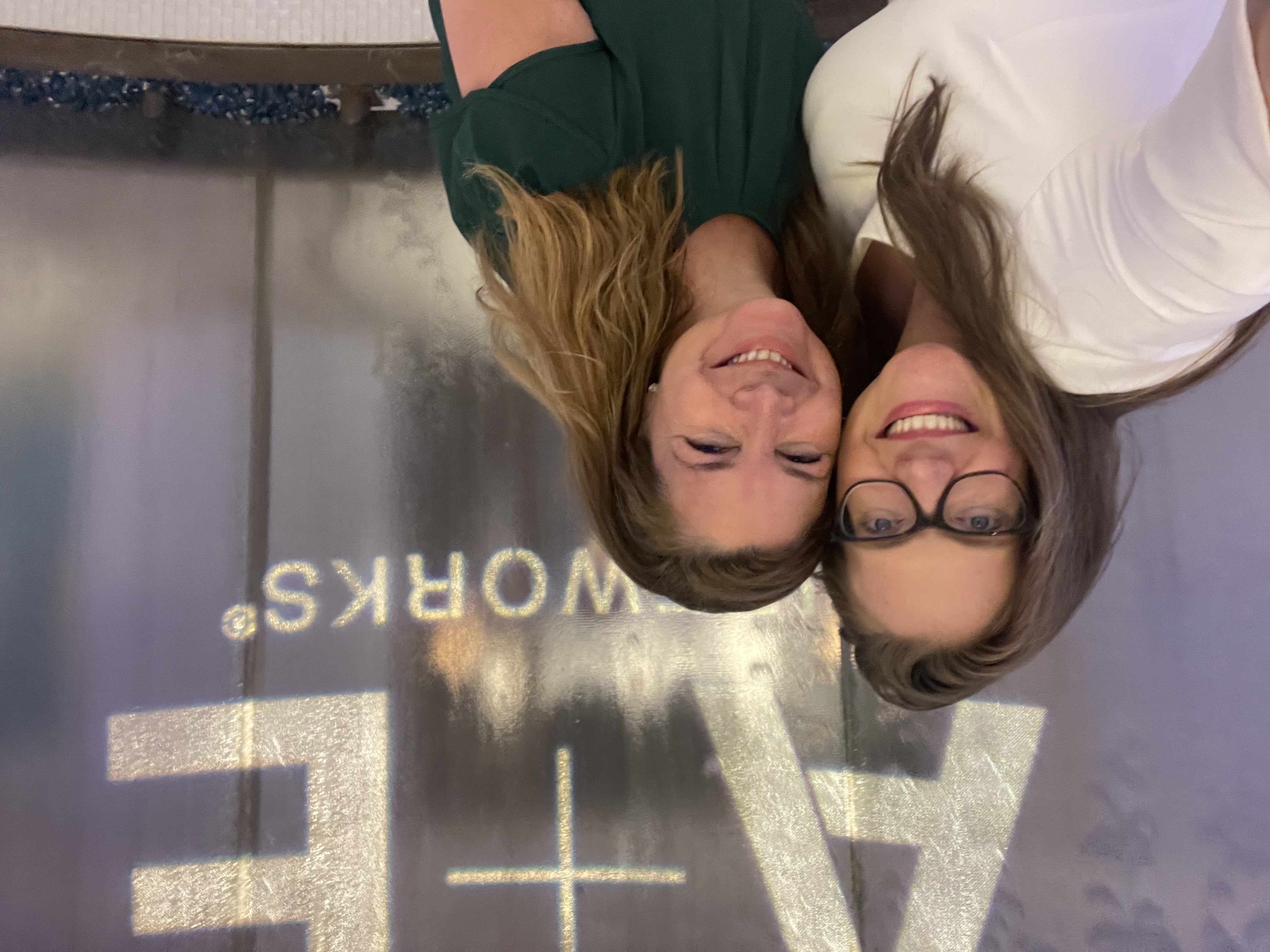
Marcie Hume is a multi-hyphenate with the compelling ability to explore the unknown by creating conditions where people feel truly seen. Michael Melamedoff sits down with the Corey Feldman Versus The World filmmaker, executive, and A+E Vice President to discuss the depth of magic when done right, film distribution as a creative act, and how transparency with your subjects allows paradoxes to unfold in powerful ways.
This interview has been condensed for length and clarity.
MARCIE HUME: We're doing it!
MICHAEL MELAMEDOFF: Here we go! I'm really excited to be with you here today. You and I first really connected and bonded not across our work in unscripted television, but over a shared love of magic and immersive theater. Can you tell me a little bit about what draws you to those forms?
MARCIE: These are my favorite things, Michael. You're so nice to ask me about them. I think with most forms of storytelling, you're watching something unfold at a distance. And I think with magic and immersive, they collapse that distance tremendously. I think something happens to you or around you in a way that resists an easy description or hopefully an easy explanation. I have always been very focused on our experience of the unknown primarily – which is what magic is ultimately about for me. But I also am very focused on our need as people to be truly seen or to recognize ourselves inside of an experience or inside of each other. Magic does that instantly if it's done right. And it creates a condition where the world feels briefly legible or known and more charged. I think immersive does that also, and extends that experience into space and time in a bigger way – and even other axes – and allows you to engineer attention in a different way. They don't escape life. I think of all of them as ways of revealing that life is already operating like this. That life is magic and life is immersive and life is full of stories. We're just usually not paying attention to it in those ways yet.
MICHAEL: Now in addition to being an executive you're a documentarian as well. You've directed four documentary features. How much do you enter a new documentary project with an understanding of the story that you're setting out to tell? I mean, you talk about this experience of the unknown…
MARCIE: I really don't go into it with any preconceived notion. I try to go into it by instinct more than anything else. I think if you go in with a sense of story – too much of a sense of story – you put yourself in really dangerous territory. So I think you want to put yourself in close proximity to something to let it reveal itself to you. Obviously, you want to have some idea of what you're doing, but I think you want to be open to behavior and to images and to contradictions, and to things that you see unfolding in front of you on all these different levels so you stay tremendously open. Use all of your acuity and all of your senses all the time to be taking in these things at once so that you're capturing the world in front of you on all these different levels. If you have too much of an idea of a story in a preconceived way, then you deaden all those inputs.
MICHAEL: I feel like we’re in a moment where when we're out in the world of pitching documentaries, there's an expectation that you're entering with a sense of where your story begins and ends. And of course, the middle in between. And working between these spaces where – as both a television commissioner and buyer and development executive and then a documentarian in your own right – how do you find the balance between satisfying very different masters in terms of how we're supposed to approach these stories?
MARCIE: Between television and films?
MICHAEL: Yeah, and specifically in the documentary space. Because so much of what you work on at A+E, for example, is in the documentary sphere or documentary adjacent, right? They're unscripted stories, they're real people stories, and yet there's a compelling need to enter with a more formed story, at least to make our partners at the networks feel safe.
MARCIE: Yeah, for sure. I think there's so many ways of talking about that – on a micro-tangent and on a philosophical level – there's connective tissue between these things on so many layers. I think there's a lot of connection in the way that you just pay attention to things. I think as a filmmaker, you're trying to understand how people reveal themselves under pressure, over time, and in their own contradictions. And as an executive you're doing something similar, but at the level of ideas and formats. You're asking what people will actually pay attention to and what feels charged enough as a human behavior to pay attention to and what people will hold their attention on. So I don't see the roles as totally separate. I think one is more intimate and the other is more structural.
But I think both are about recognizing what is really real and what will resonate with people and building the conditions for it to be seen and felt. I have learned personally that both are also about being truthful with people. Tell people what your process is so that they feel that they understand what's going on. Both involve the power of the camera which is a very intense proposition, and to have the power of the camera is to sign up for something and decide that you're going to wield that power. So be straightforward about what you're going to be doing with that power, and be straightforward and truthful with people. So I think working in both spaces sort of sharpens the same instinct from two directions of how to witness and how to shape.
MICHAEL: I loved your newest movie, Corey Feldman Versus The World. When we talk about what an audience wants and who an audience is, there probably wasn't a better audience for your movie than me – a kid who took his allowance money to go see Dream a Little Dream in theaters, and loved Corey from The Lost Boys and Lucas and Stand by Me and all those movies. He was a kid that I saw myself in as a young man and idolized. Your movie is truly insightful, and it's a transformative look into a celebrity who obviously has achieved a certain degree of notoriety across the past couple of decades beyond his early fame. How did you find yourself in that world? What was the process of bringing that story into focus? Hearing you talk about the power of the camera, here's a subject who may have really grappled and resisted the power of the camera. So I'm curious what you can tell me about those experiences.
MARCIE: I think Corey [Feldman] really accepts the power of the camera and lives from it, actually. But I didn't go looking for any particular Corey Feldman story. I set out to meet him and gain access to him – then I encountered a person who was living inside a very specific reality. I was very curious about how that reality held together. And I think Corey is someone who has been seen by the world for decades by people like us and by the media and has rarely been understood on his own terms. I think that tension is what came out in every way in the movie – this tension between public image and his own private logic.
That's where this documentary became most intense because, you know, after giving me this very intimate access for some time, he ultimately stopped being a part of the film all together. But I think that those paradoxes began to reveal themselves. So just understanding what things made sense to him and that internal coherence of his world was really amazing. There were so many things in Corey's world in so many different directions that I really chose to stand back and be very quiet. There's no narration in the movie. It was very much an observational because there is so much going on in Corey's world, in Corey's inner landscape, that to just be there and observe is enough to keep the audience participating and deciding what to to see as truth and try and understand Corey's narratives ultimately.
MICHAEL: Jim Cummings, terrific filmmaker and producer in his own right, is a credited executive producer on your film. As long as I've known him, Jim has been a real evangelist for self-distribution – getting movies made on your own terms and making sure that they can find their ways to audiences. Can you tell me a little bit about his role on your movie and how he may have impacted your approach to getting the film out into the world?
MARCIE: Jim is somebody who treats distribution as a creative act and not just logistical. So that was really his role on the film. It was practical, but also a philosophical effort. You know, he understands how to actually get a film into the world and without waiting for permission, which I think is kind of the key right now. We're entering this time where you're not going to get permission from anyone. You're not necessarily going to get any necessary support or green light or anything. I think Jim just really enforces the idea that the life of a film doesn't end when the movie is finished. It maybe just begins there. How you release it and where you place it and how you frame it for audiences – those are all extensions of the movie and the work that you've done. So his outlook has been almost redemptive for me and for our little team, so we don't have to sit there thinking: Who will take this movie? Who will pay attention? It's instead saying: Where are we putting this now?
I said this at our Q&A at our premiere, but his belief in other people is almost this supernatural thing. It's so rare to find human beings who believe in other people as much as they believe in themselves. And that is his superpower. So it was just extraordinarily lucky. That was the greatest stroke of luck for our movie.
MICHAEL: Hearing you talk earlier about putting yourself in the place of audiences and thinking about what's going to truly make an impact for an audience…I wish more filmmakers thought about the audience early and through the lens of marketing and distribution. If independent filmmakers were thinking about this when they’re out there pitching their movies, to know exactly who your audience is and where you're going to find them would just make a lot of filmmakers' lives easier, and would be a deeply empowering act.
MARCIE: Yes. Once you start following someone like Jim who espouses independent distribution, you will see stories that massively inspire you. And I am one of those people. If I open my social media, I just see other stories of films that started with nothing and then had a great success story. And obviously that takes a tremendous amount of work. With this movie, I can think of a thousand days where we thought: This is never going to come out. We knew it was going to come out, but it just felt like there was a hurdle at every turn. But I just think that's the moment that we're in, and just know that if you decide you're going to do it and it's going to be out there, the tools are there for everybody to do it and to make it happen, which is just absolutely tremendous and awe-inspiring.
MICHAEL: Where can people find your movie now?
MARCIE: It's available to rent on Apple – and you don't have to subscribe to Apple! Also on YouTube and Google. You can go to our Instagram @cfvstw if you want to keep up with the movie. We have a website which is coreyfilm.com… All those places are great. So thank you for asking.
MICHAEL: Of course, I want everybody to see your movie.
Last question. As you continue to juggle all of these awesome hats as a network executive, as a co-creator and producer of immersive theater, and as a documentarian, what's the thing that you're most excited to sink your teeth into next? What's the thing that's getting you up every morning excited to go out and create?
MARCIE: It's always that thing that is beyond description. I’ve been thinking about it as putting down the camera and having a more direct experience with the world. And it is always that thing that can't be named by language yet and that you're trying to decipher for yourself. So those are the things that truly keep me up at night, literally.
MICHAEL: I can't wait to see whatever you do next. I'm so excited to hopefully soon share the project we're working on together with the world. And thank you for making the time for me today.
MARCIE: Thank you for inviting me. You're the best.
MICHAEL: Aw. You are. Thanks, Marcie.


