Five Questions with Madelyn Cunningham
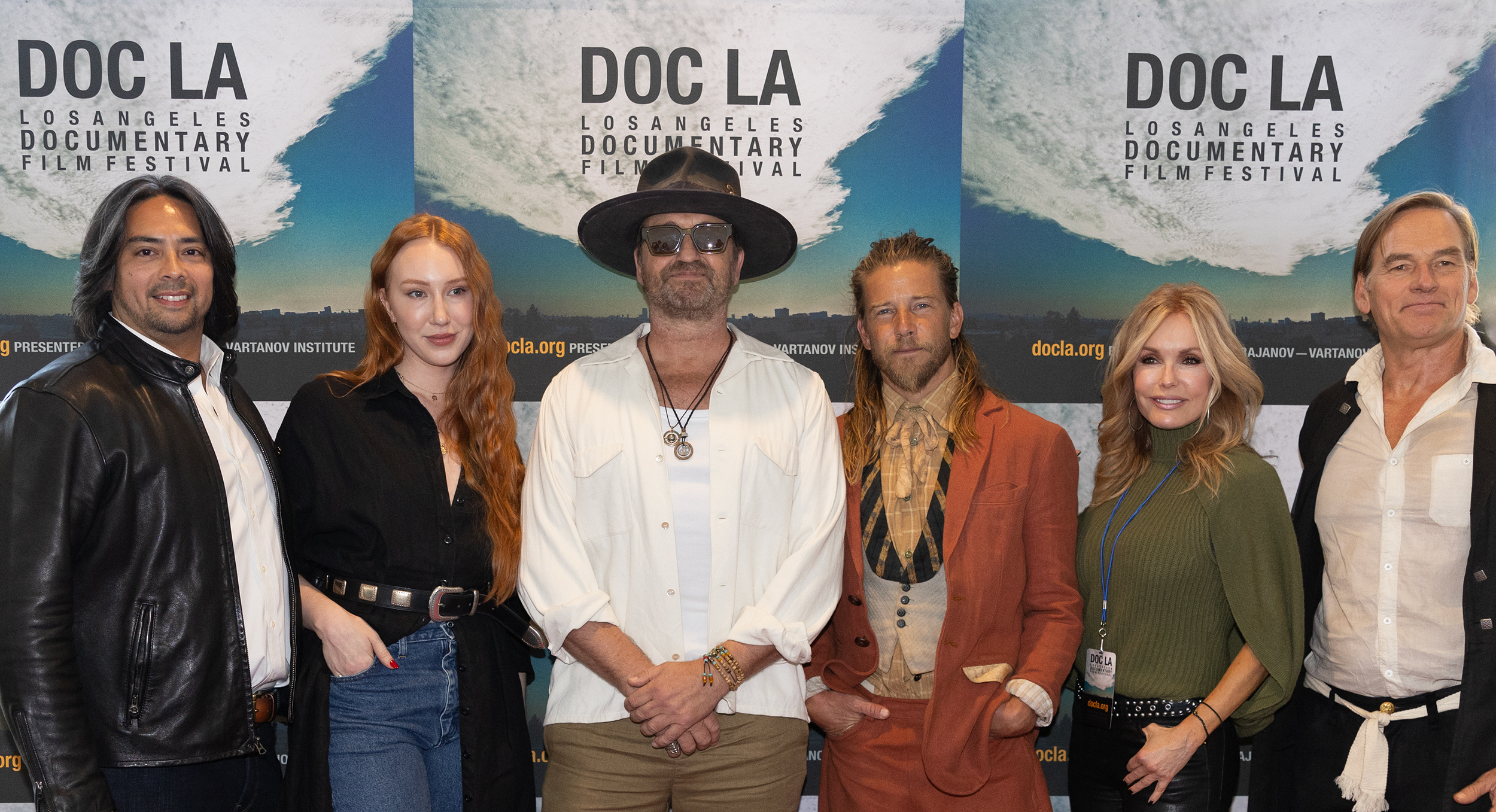
It’s an interesting time to work in Hollywood, and no one knows that better than Madelyn Cunningham. As Head of Development at Good Gravity Entertainment, Madelyn draws on her personal experiences to shift her slate as long form becomes short form becomes branded long form becomes video podcasts…you get the idea. Keeping things personal ignites her passion to push past the fatigue and find that necessary resiliency. Michael Melamedoff discusses this and more with Madelyn in his latest Five Questions.
This interview has been condensed for length and clarity.MICHAEL MELAMEDOFF: I’m thrilled to be here today with a creative partner that I love, Madelyn Cunningham. I'm currently working with you on a paid development project, and we also have another series in the works with her. Madelyn, across your career you’ve played in so many creative spaces. To my understanding you've worked in podcasts, across brand entertainment, and unscripted television now as well. And you’re presently at a company called Good Gravity, can you tell me a little bit about the work that you've been doing at Good Gravity Entertainment and their parent company Designsensory?
MADELYN CUNNINGHAM: Sure. Good Gravity Entertainment is a natural evolution of my work with Designsensory. I started there seven years ago, and eventually started working in the branded entertainment space with them, working with our clients to produce podcasts, launch series, long form, short form… And I really felt compelled to start developing long form content, and I know that was a direction that they wanted to go as an agency. So when things started rolling, I wanted to spin off our entertainment-focused division so that I could not only create content for our clients, but could also develop original formats and things that were brand agnostic.
MICHAEL: We're at such an interesting moment where I think a lot of people are trying to figure out: Where is that intersection between long form content and branded content? We're seeing a lot of it start to surface in digital spaces. Do you have any advice as somebody who's worked in both who is also trying to thread that needle right now?
MADELYN: It's an interesting time. We have long form content that is now being chopped up into 101 pieces of short form content, [laughs] and we have long form platforms that are now buying short form content for their long form platforms! Ultimately regardless of what is trending and what is the buzzword, I think at the end of the day it’s: What is the story? What are you trying to say? In what format does it make the most sense and is the strongest? And obviously, yes, you have to go where the industry is going, but you won't be successful following the trends if you don't make sure that the stories you're telling and the things that you're creating work in those lanes.
MICHAEL: So many of the stories that I've seen you invest in – the ideas that you've pitched me, the things that we're working on together – they feel in a lot of ways hyper-local. You tell stories that hit close to home, both in a regional geographical sense and also close to home in terms of where your heart and your head are at. What is your compass when you're seeking out projects and partnerships?
MADELYN: When I was an emerging producer and trying to break into the industry, trying to create a slate of content and formats and concepts, I drew heavily on my own experience. You're going to work on these projects for years and years. You want something that you're passionate about that relates to you in a way that you can get constantly excited about. Because there are going to be ups and downs – you and I know that more than anyone. So when you can draw on something that hits literally close to home, it really helps you push past the fatigue and find that resiliency. It also helps you access and unlock passion when you're in the pitch, when you're trying to sell the project. I've been lucky that a lot of the projects that are personal to me are the ones that have gone to series or gone into development. Sometimes it doesn't work that way, but pulling from that place and unlocking the passion that that brings has been a recipe for success for me so far.
MICHAEL: Speaking of personal, you also develop projects with your husband, Chad Cunningham, who's an established television director. What is it like working creatively so closely with a life partner?
MADELYN: I'm very lucky. I went to college to become a doctor. He is the first person who ever told me I would be a good producer, and really ignited that curiosity for me. And while we both creatively have very different tastes and work in our own lanes, whenever something comes across one of our desks that we know will only be enhanced by the other person, it's always really exciting.
MICHAEL: That's amazing. That's an incredible thing to have. Now, last year you had your first original series go to air with you as an executive producer, right? A series called Mom’s the Bride at Hallmark Channel. Shortly thereafter, we all learned that Hallmark's unscripted content mandate was changing dramatically. Now, these pitfalls – they are not unique to you. I can't tell you how many series I've sold over the last few years only to have the executive I sold it to move on six months later, or witness an entire network collapse just as a second season of a show was greenlit. We're all experiencing some version of this. How are you personally navigating these challenges?
MADELYN: I mean, just in the last week we had the announcement that Fox is buying Roku, we’re right in the middle of the Paramount and Warner Brothers merger, we had a major exit of a Head of Content at Netflix… So it's a very tricky time. I think what I've learned with all of the ups and downs is to be really attached to the process and not the outcome. As far as trying to continue to push projects along and champion them, I think it's really just – I know it sounds boring, but I really stay on top of the trades. I try to ensure that I'm listening to feedback, and if a mandate is shifting I try to shift with it. I try to stay persistent as well. And with all of these changes, you can bring projects back every six months now. There's a lot of older things on my slate that I'm able to bring back and bring to life because people aren't staying in positions for a long time anymore. So, resiliency is a characteristic that I've had to really build up and practice and strengthen, especially lately. But ultimately trying to stay on top of where the pieces are moving, where the trends are going, really paying attention to the cultural conversation – I think that is important. I know a lot of people who work in media who aren't on social media or don't consume the media they make. And while I get that, I really think it's important to be as tapped into your own marketplace as possible to see what's working and what's successful.
MICHAEL: Yeah. I mean, look, I'm a film school kid. The whole reason they made us watch a billion hours of Hitchcock and Ozu and Scorsese wasn't just because they were great, it was because you had to know creatively what risks people had already taken, what people had done before. The only way you can build artistically, regardless of the space you're working in, is to understand who did what before you. I'm curious too – beyond Deadline, beyond Variety... Are there any things that you think are must-reads or must-listens for people who are working in our industry right now?
MADELYN: I mean, I love The Town. Typically Matt [Belloni] focuses on scripted, but he’s been tapping a lot into unscripted and YouTube and talking to digital talent. And as we see content and entertainment and the Venn diagrams between scripted, unscripted, digital, long form, branded just become one big circle, it really is becoming less and less siloed. I also, honestly, have a really great friend, Emily Wilson, who posts on LinkedIn every single Friday these just amazing bullet points about everything that's happening in unscripted both in the U.S. and overseas. I think it's important to be tapped into the international market as well.
MICHAEL: I think Puck's coverage is really exceptional.
MADELYN: I agree. I get Lucas Shaw’s newsletter every Sunday as well. I think they do a great job.
MICHAEL: Speaking of networks undergoing a sea of changes, we talked about the fact that a Head of Content left Netflix recently where you are presently developing an original format. So Netflix is not immune to changes, but I do think that they're going to stay a constant in the television landscape for years to come. For other young producers hoping to crack the Netflix code and the sale, how do you approach your pitch andng them as a network?
MADELYN: As the first streamer and the one who's been around forever, they [Netflix] have seen it all. They see every pitch that comes through the industry. So the idea that you could wow them was really intriguing to me. Like, how can I present something that feels different and fresh when these guys know every single thing in the marketplace and have seen it all? For me, just like the shows that I try to create and the things that I try to develop, I don't want to talk at you, I want to talk with you. I want to make someone so excited that they almost interrupt me with their response. I said that I went to school to be a doctor; I was a psychology major. So for me, it's really tapping into really relatable natural human desires. And with this particular project, that was easy to do. But it really did take a bit of finesse when it came to pitching to elicit that response that it was something they couldn't wait to start talking about. That's the feeling that I also want to create with the shows that I have. Don't get me wrong, there's an art to it, but I think ultimately it’s: How can I tap into this very, very human thing? And then support it with a lot of evidence that everyone else is doing this too.
MICHAEL: Love that.
MADELYN: Aw.
MICHAEL: Not surprised to get such a thoughtful answer because I found you to be an incredibly thoughtful development partner who applies this level of thought to everything that we work on together. So thank you so much for taking the time to chat with me today and can't wait to get back into a development session with you.
MADELYN: Yes absolutely! I think I'll see you on Monday.
MICHAEL: See you Monday!


